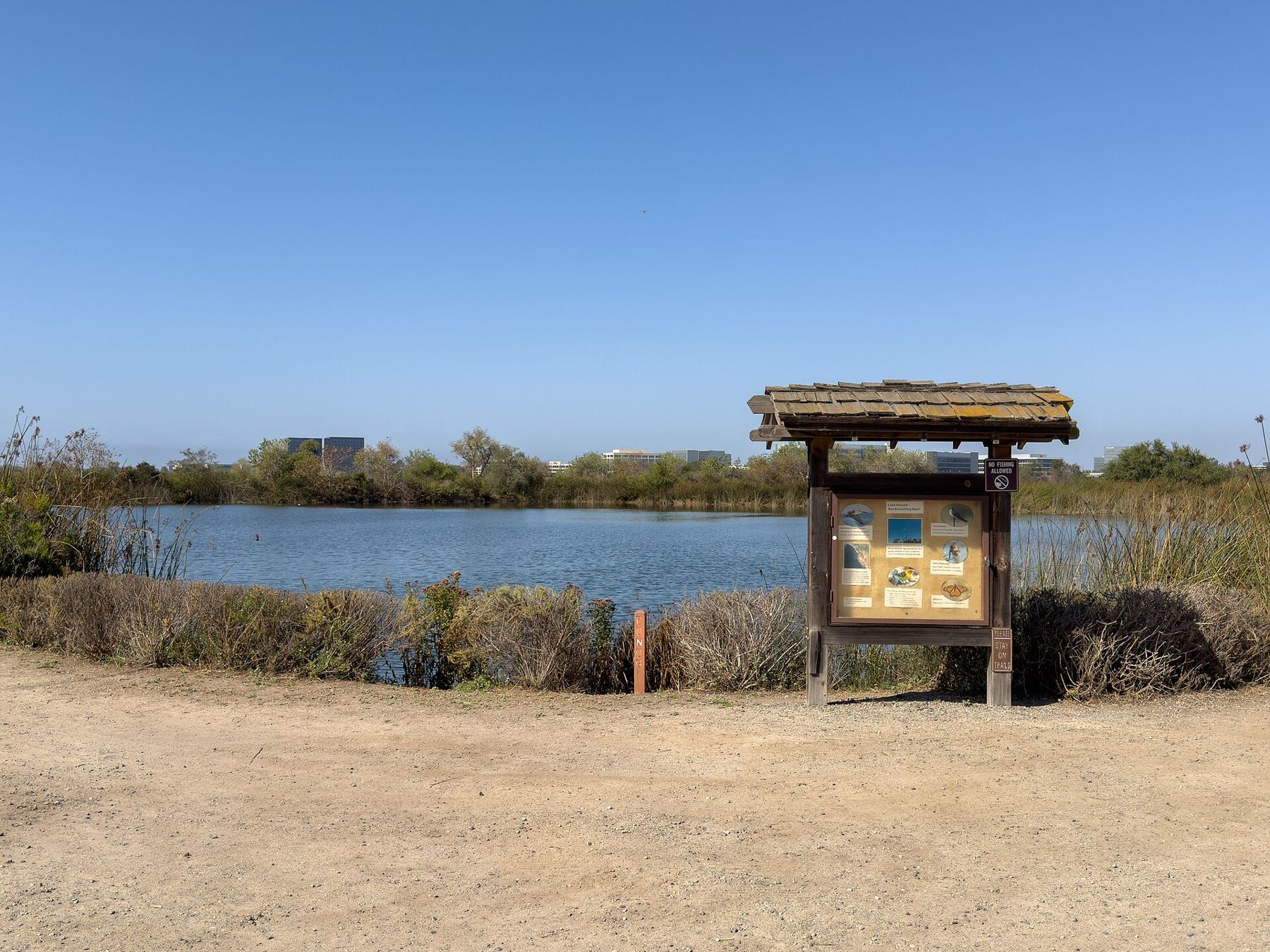
Of all the green places near John Wayne Airport (SNA), the San Joaquin Marsh is the one closest to the terminal and the easiest to explore. It is a set of shallow ponds and wetlands in Irvine, laid out with flat, wide paths and a few viewpoints. You will not see the ocean, and there are no cliffs or beaches. What you will see, on most days, is a large number of birds at close range, in a setting that feels far from the airport even though planes are never quite out of earshot.
What the marsh is
The area is usually signed as the San Joaquin Wildlife Sanctuary. It covers a few hundred acres of the old marshland that once spread across the lower reaches of San Diego Creek before the area was farmed and later built up. Today it is managed by the local water district, and many of the ponds are part of a natural treatment system: water flows slowly through them and is cleaned by plants and sediment before moving on towards Upper Newport Bay.
That practical purpose produces a rich habitat. Willows, cottonwoods and reeds line the ponds, and the open water attracts ducks, coots, grebes and wading birds. Hawks hunt over the fields, and small songbirds move through the scrub along the paths.
The paths and what you will see
Several miles of gravel and dirt paths run between and around the ponds. They are level and easy to walk, and you can turn back at any point. A loop of an hour or so takes you past most of the open water. Information boards near the entrance show a map and describe the ponds, which are numbered.
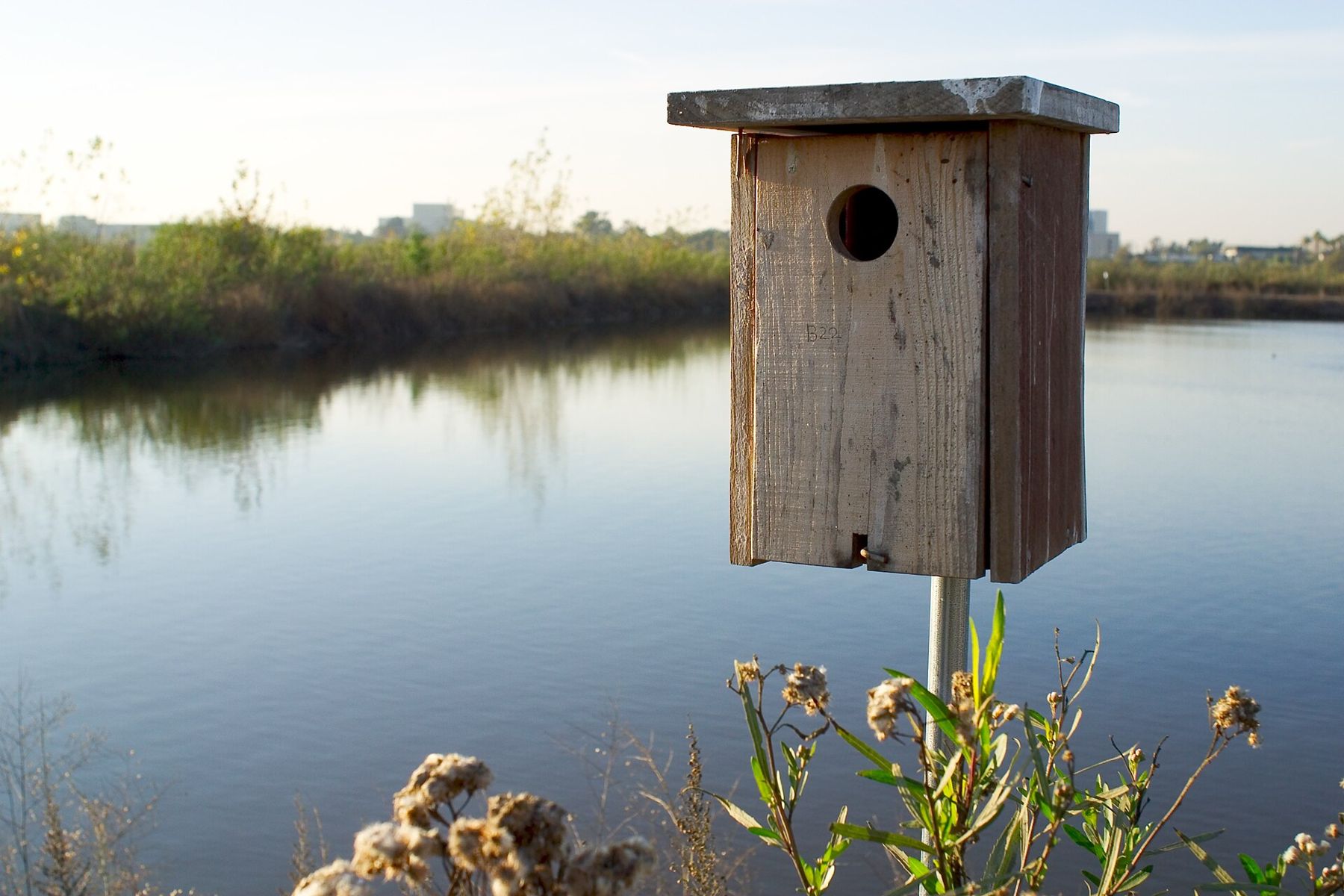
Nest boxes stand on poles around the site, used by swallows and other cavity-nesting birds in spring. Herons and egrets fish along the banks all year. In autumn and winter, the ponds fill with migrating waterfowl, among them shovelers, teal, wigeons and ruddy ducks, and shorebirds probe the shallow edges when water levels are low.
You do not need to be a dedicated birder to enjoy it. Even without binoculars, the sight of a heron standing motionless at the water's edge, or a flight of ducks coming in to land, is a calm change from the terminal.
Dawn and dusk
Birds are most active in the first hours after sunrise and again in the late afternoon. Morning light is soft and the paths are quiet; on many days a light marine haze hangs over the ponds early on. Late afternoon brings warm light and more people walking, but also good activity as birds return to roost. The middle of the day can be hot and still, with fewer birds in view.
If your flight times let you choose, an early-morning visit before a midday departure is ideal. The guide to June gloom, Santa Anas and the best hour of light explains how the coastal weather shifts through the day and the seasons.
Hours for the sanctuary are generally from dawn to dusk, and some areas can close for maintenance, flooding or nesting. Check before you go.
Getting there
The marsh lies a short distance from the airport, near the University of California, Irvine. A taxi or rideshare from the terminal takes roughly five to ten minutes in normal traffic. Ask to be dropped at the sanctuary entrance; the access road leads to a small parking area and the trailheads.
If you would like to walk or cycle part of the way, local bike paths along San Diego Creek connect the area with Upper Newport Bay. On a short layover, though, this adds time and complexity. The guide to buses, bikes and what to do with your bags covers the options in general terms.
Mobile signal is usually fine here, but it is still wise to agree a pickup time and place before you set out, rather than relying on finding a ride at the last minute.
What to bring and how to behave
Bring water, a hat and sunscreen: shade along the paths is patchy. Comfortable walking shoes are enough; boots are not needed. Binoculars make a large difference if you have them in your bag.
This is a wildlife sanctuary, so stay on the paths, keep noise down and do not approach nesting birds. Dogs, bikes and other activities are restricted in parts of the site; follow the signs at the entrance. Do not feed the ducks or other birds.
Restroom facilities are limited, so plan for that before leaving the terminal.
Fitting it into a layover
The marsh suits the shortest layovers of all, because the travel time is so small. A realistic plan, if you have three hours or so to spare outside the terminal, is:
- A short ride to the sanctuary entrance.
- About an hour walking around the ponds.
- A short ride back, with most of your spare time kept as a buffer.
The trip is simple, but it is not risk-free. Traffic around the airport can be heavy at rush hour, and security lines vary. Before you leave the terminal, read leaving the terminal to judge whether it makes sense to go at all, and always check your airline's own advice for how early to be back.
If you have more time, the nearby Upper Newport Bay offers a larger, more open landscape of the same kind, with tidal mudflats and bluffs. Combined, the two make a good half day for anyone interested in birds.