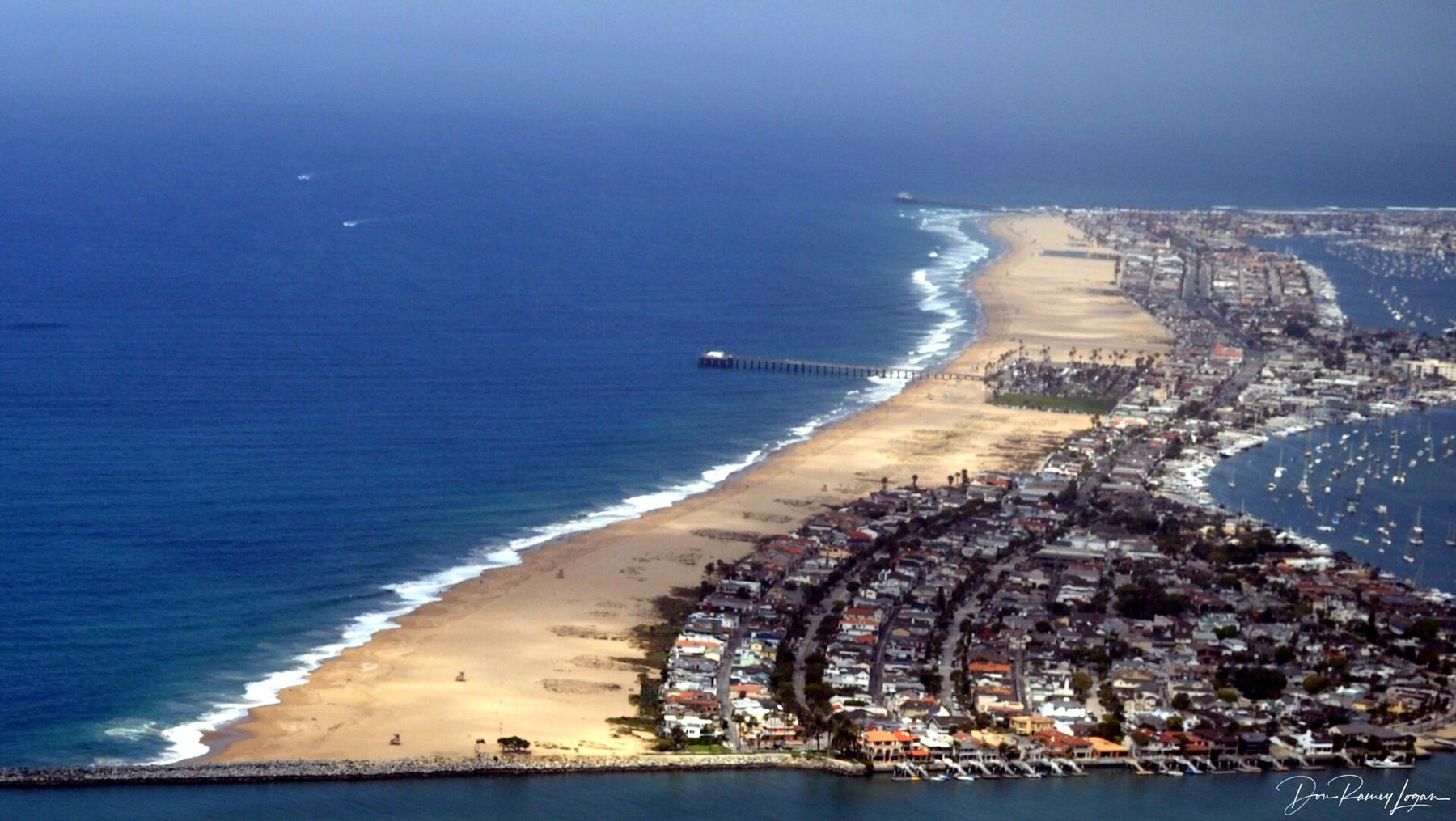
The Balboa Peninsula is a narrow strip of sand and houses that runs for several miles along the edge of Newport Beach, with the Pacific on one side and Newport Harbor on the other. At its eastern end are the Balboa Pier, a small seaside fun zone and the landing for one of the shortest and oldest ferry crossings in California. For a layover at John Wayne Airport (SNA), it is one of the easiest ways to put your feet in the sand and see a working harbour in a few hours.
The shape of the peninsula
The peninsula is long and thin. A single main road runs down its length, with short streets crossing from the ocean beach to the harbour. At its tip, a rock jetty marks the harbour entrance; across the channel are the bluffs of Corona del Mar.
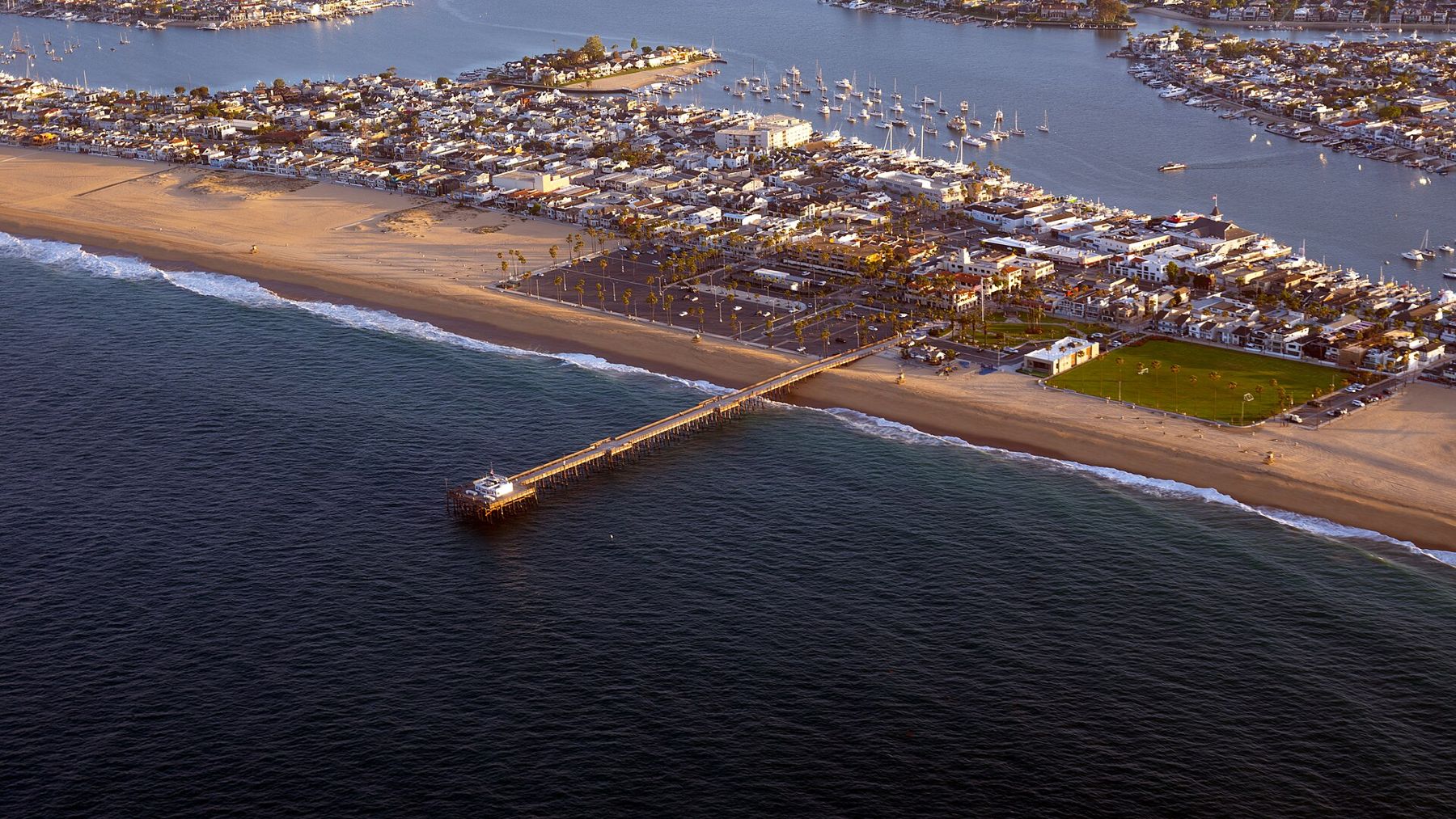
Two piers punctuate the ocean side. The Newport Pier stands about halfway along, and the Balboa Pier near the eastern end. Between and beyond them, the beach is wide, sandy and open to the public, with a paved boardwalk for walkers and cyclists running for a long stretch behind it.
The area grew as a seaside resort in the early twentieth century, when an electric railway line from Los Angeles began bringing day-trippers to the sand. Much of what visitors enjoy today, from the piers to the waterfront pavilion, comes from that era, even though the houses around them have been rebuilt many times since.
The boardwalk between the Newport Pier and the Balboa Pier is a couple of miles long and almost completely flat. If you want a longer walk, you can be dropped near the Newport Pier and stroll along the sand or the boardwalk to the Balboa end, watching the surf and the beach volleyball on the way. Bikes share the boardwalk, so keep to the side and look before you step across.
On the harbour side, the water is calm and lined with docks, boats and houses. Small islands sit in the harbour, the best known being Balboa Island, reached by bridge from the mainland or by ferry from the peninsula.
The Balboa Pier and the beach
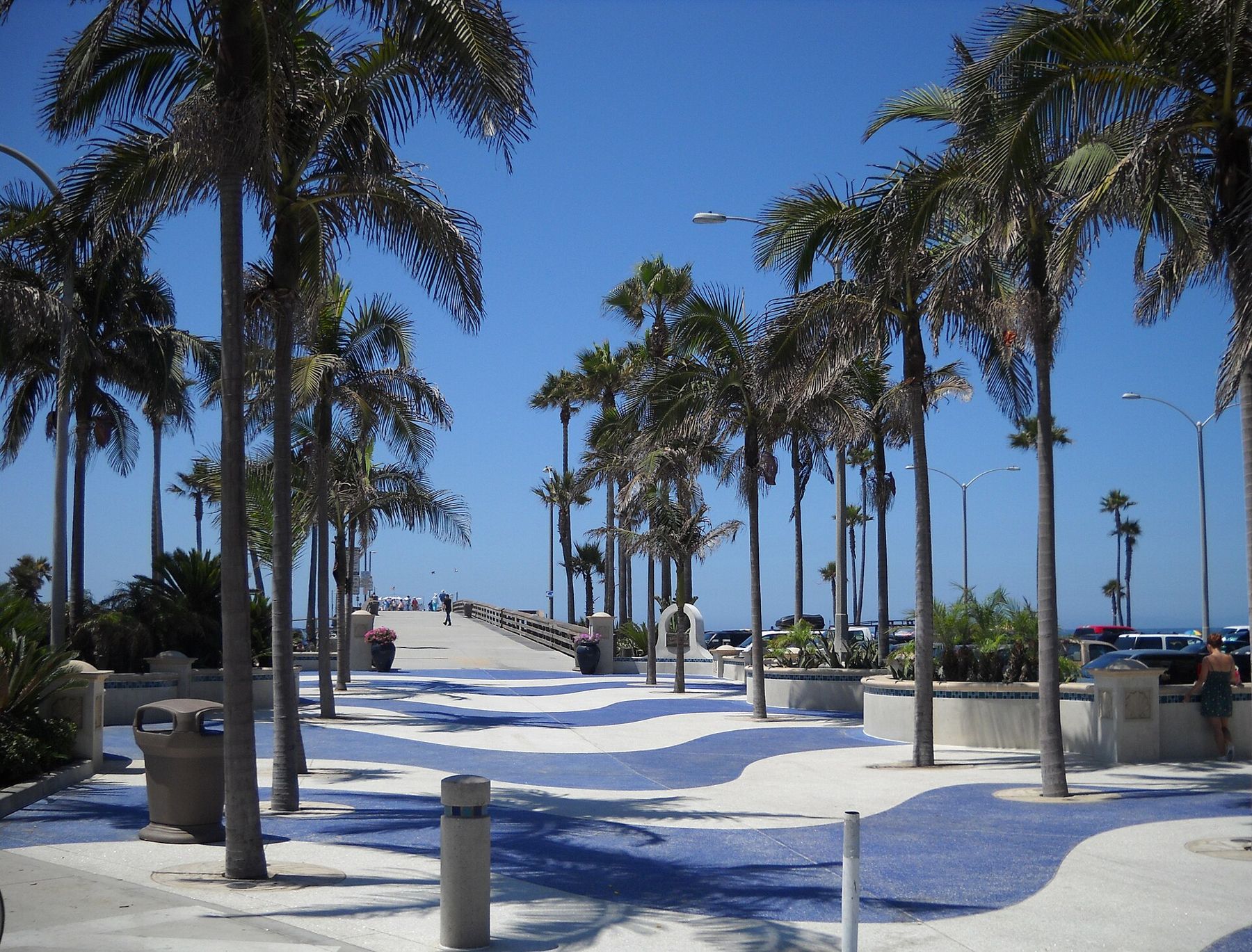
The Balboa Pier dates back to the early twentieth century and stretches well out into the ocean. Walking to the end and back is a pleasant half hour, with views along the coast in both directions and of surfers and fishing from the rails. At the base of the pier is a palm-lined plaza with benches, and the beach runs away on either side.
It has been running in one form or another for more than a century.
Ocean conditions here can be strong. If you swim, do so near a staffed lifeguard tower and follow the flags and warnings. At the very tip of the peninsula, beside the jetty, lies the area known as the Wedge, famous for very large, powerful waves that break close to the shore in certain swells. It is spectacular to watch from the sand on a big day, and dangerous for anyone who is not an experienced bodysurfer.
The Fun Zone and the harbour side
Walk a few blocks from the pier across to the harbour side and you reach the Balboa Fun Zone, a small waterfront amusement area that has been here since the 1930s. It has a Ferris wheel, a few rides and arcades, and a harbour-front path. Nearby, the Balboa Pavilion, a white wooden building with a cupola, has stood at the water's edge since the early 1900s and is one of the area's best-known landmarks.
This is also where harbour cruises and seasonal whale-watching boats leave from. Departure times and prices vary by season and operator, so check before you go, and remember that a boat trip adds a fixed block of time you cannot cut short. If whales interest you, the guide to Dana Point covers the wider picture.
The ferry to Balboa Island
The Balboa Island Ferry is the highlight for many visitors. It runs back and forth across a short stretch of the harbour between the peninsula, near the Fun Zone, and Balboa Island. The boats are tiny, carrying only a few cars at a time alongside pedestrians and bikes, and the crossing takes just a few minutes. It has been running in one form or another for more than a century.
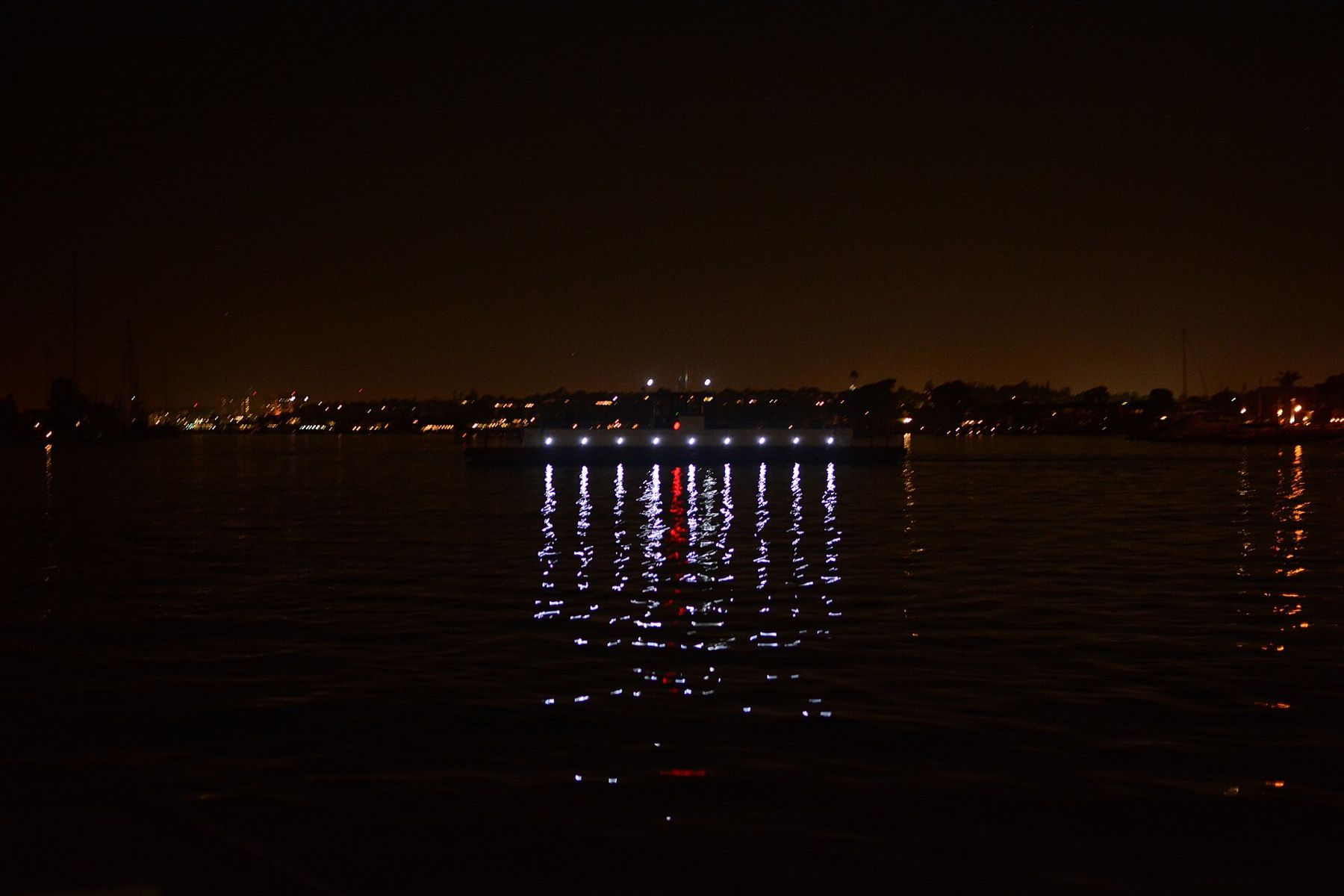
Foot passengers simply walk on. Fares are modest but do change, and the ferry runs to a schedule that varies by season, with a continuous shuttle across during operating hours. Check before you go, especially for a late-evening crossing.
Balboa Island itself is small and residential. A path runs right around its edge along the water, which makes a pleasant loop of an hour or less. The main street has a few blocks of small businesses. From the island you can either ride the ferry back or walk across the bridge to the mainland and get a ride from there.
Getting there and timing
The peninsula is roughly twenty minutes by car from the terminal in normal traffic. Ask to be dropped near the Balboa Pier, then explore on foot. Parking is mostly metered or in paid lots and fills fast on warm weekends and holidays; rules change, so read the signs. For general advice on pickups at the airport, see leaving the terminal.
A practical three-hour visit looks like this:
- Walk out to the end of the Balboa Pier and back.
- Cross the peninsula to the Fun Zone and the Pavilion.
- Ride the ferry to Balboa Island, walk part of the island's waterfront path, and ride back.
- Head back to a pickup point near the pier with time to spare.
The key thing to understand is the traffic. The peninsula has one main road in and out. On a sunny weekend, especially in summer, that road and the coast highway beyond it can slow to a crawl. On a quiet weekday morning it may be fine. Plan to leave the peninsula at least three hours before your departure, more for an international flight, and check your airline's advice on how early to be at the airport.
Best times to go
Autumn and spring are the most comfortable seasons: warm enough for the beach, with fewer crowds than in summer. Summer brings the busiest beaches and the heaviest traffic. Late spring and early summer can be grey in the morning, under the coastal marine layer, clearing in the afternoon; see June gloom, Santa Anas and the best hour of light.
Evenings are a quiet pleasure here. The harbour lights come on, the ferry keeps crossing, and the pier is calm. Just make sure the late hour fits your flight, not the other way round.