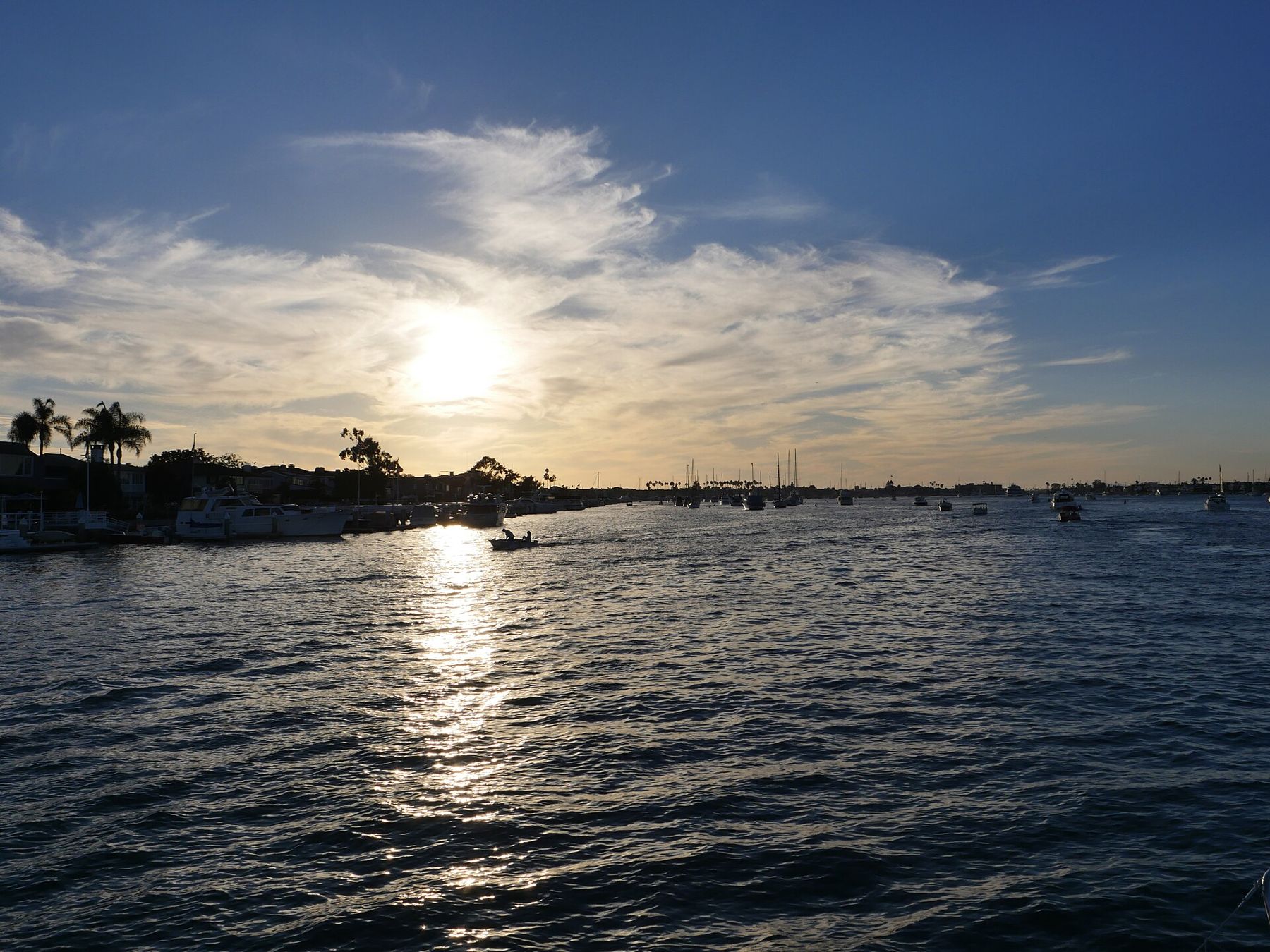
Orange County has a reputation for endless sunshine, and much of the year it earns it. But the weather here has patterns of its own that can surprise a visitor on a short stop: grey skies at the beach in early summer, hot desert winds in late autumn, and an ocean that stays cool even when the air is warm. Knowing them helps you pick where to go on a layover from John Wayne Airport (SNA), what to bring, and when the light is at its best.
The marine layer and June gloom
The ocean off Southern California is cool, and on many nights a layer of low cloud forms over it and drifts inland. Locals call it the marine layer. It is most persistent in late spring and early summer, which is why people speak of May grey and June gloom. On those days the coast may stay overcast until late morning or afternoon, or all day, while a few miles inland the sun is out and the air is much warmer.
For a layover, this matters. A beach trip in June may be cool and grey, while an inland walk is hot and bright. If the coast is grey when you land, an inland trip such as Old Towne Orange may suit better. The marine layer can also bring fog to the water and the harbours, which can affect boat trips.
Santa Ana winds
The Santa Ana winds are the opposite. Mainly in autumn and winter, high pressure over the inland deserts pushes hot, very dry air down through the mountain passes and canyons and out to sea. On a Santa Ana day, the air is unusually clear, the temperature can climb sharply even in November or December, humidity drops very low and gusts can be strong, especially in the canyons and foothills.
These are the days of the clearest views, when Catalina and distant mountains seem close. They are also days of high fire danger. Parks and trails in the hills may close at short notice, and you should never light a fire or use anything that throws sparks outdoors. The guide to the Santa Ana Mountains has more on fire season.
Rain
Most of the year's rain falls between roughly November and March, often in a few strong storms rather than steady drizzle. Storms can bring flooding on roads, slides on steep slopes and closures of trails and coastal paths. After heavy rain, runoff can make the water near creek and river mouths unsafe for swimming for some days; look for posted advisories.
Sunset and the best hour of light
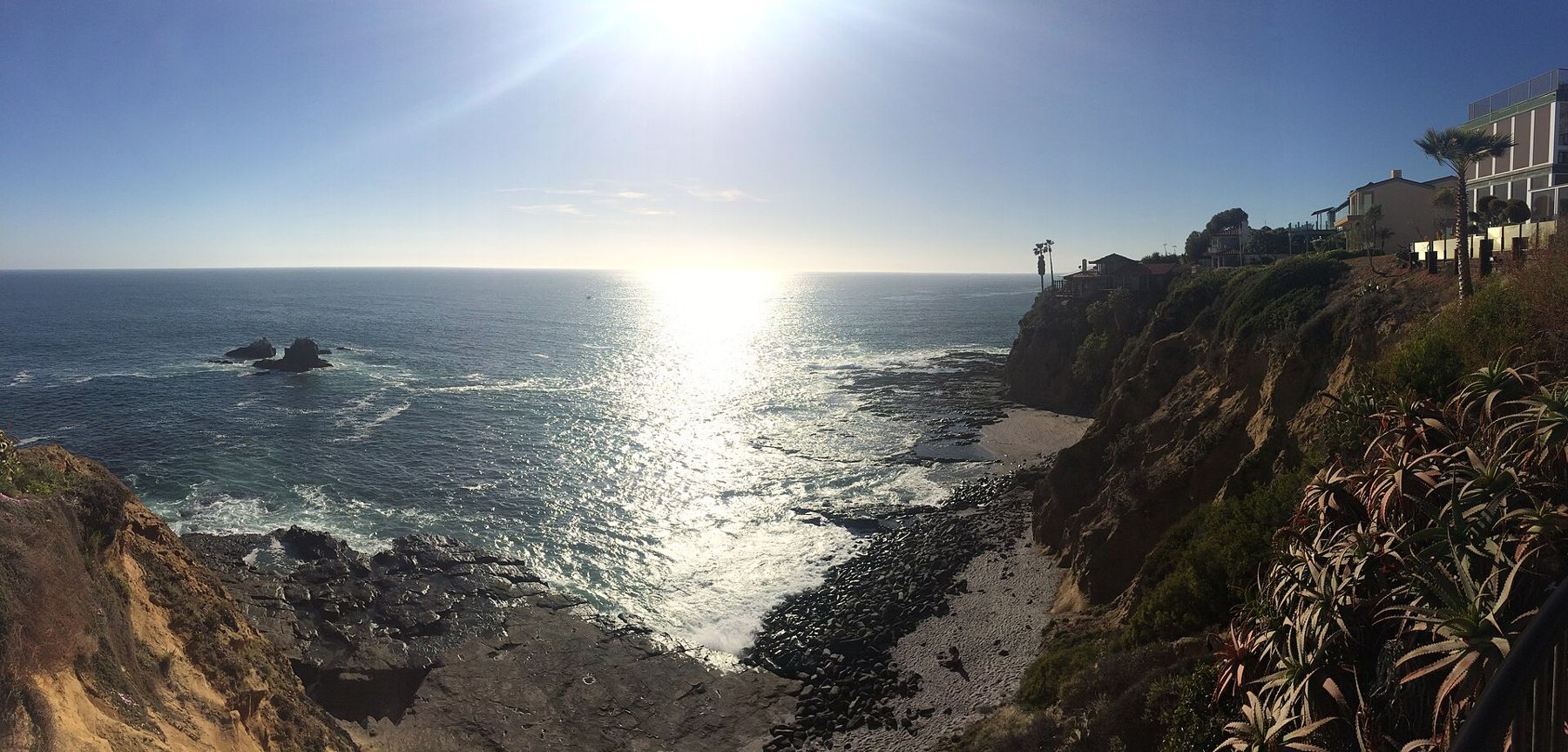
The low sun of late afternoon is the best light of the day on this coast, warm and golden across the bluffs and the water. Sunset times swing widely through the year: before five o'clock in early winter, and after eight around midsummer, when daylight saving time is in force. Check the exact time for your date before you plan a sunset trip.
| Season | Typical sky | Sunset, roughly |
|---|---|---|
| Winter | Clear between storms; Santa Ana days | Around five |
| Spring | Mixed; grey mornings increase | Seven to eight |
| Early summer | Marine layer common at the coast | After eight |
| Autumn | Often the clearest and warmest | Six to seven, earlier late in the season |
The direction of sunset moves too. In winter the sun goes down well to the southwest, in summer well to the northwest. Along most of the coast it sets over the water much of the year, though headlands and islands can block it from some beaches. Autumn and winter often bring the clearest light of all.
A sunset trip has one obvious drawback on a layover: you start back in the dark and often in evening traffic. Leave as soon as the light goes.
Morning light has its own rewards. Early in the day the air is often still, the beaches are quiet and the birds in the marshes and estuaries are at their most active. Under the marine layer, the light is soft and even, which suits the tide pools, the old buildings inland and the wetlands better than harsh midday sun does. If your connection leaves you free early in the morning, a dawn walk can be as satisfying as any sunset, and it has the great advantage of sending you back to the terminal before the heaviest traffic of the day.
How cold is the water?
The Pacific here is cooler than many visitors expect. In winter and spring it is often in the high fifties Fahrenheit, cold enough that most surfers wear full wetsuits. By late summer and early autumn it warms, often into the high sixties or low seventies in good years. Upwelling, when winds push surface water away and cold water rises from below, can drop the temperature sharply for a few days at any time of year.
If you plan to swim, keep it short, stay near an open lifeguard tower and respect the flags. Watching the surfers at Huntington Beach in their wetsuits in midwinter gives a good sense of the conditions.
What to pack for any season
- Layers: the coast can be cool and damp in the morning and hot by midday.
- Sunscreen and a hat, even on grey days, when the sun still burns.
- Water, especially inland and in the hills.
- A light jacket for the evening, the boat or the beach after sunset.
On a clear autumn day, with the haze gone and the sea flat, you may see Catalina Island sharp on the horizon from the bluffs. That is the light worth planning for.