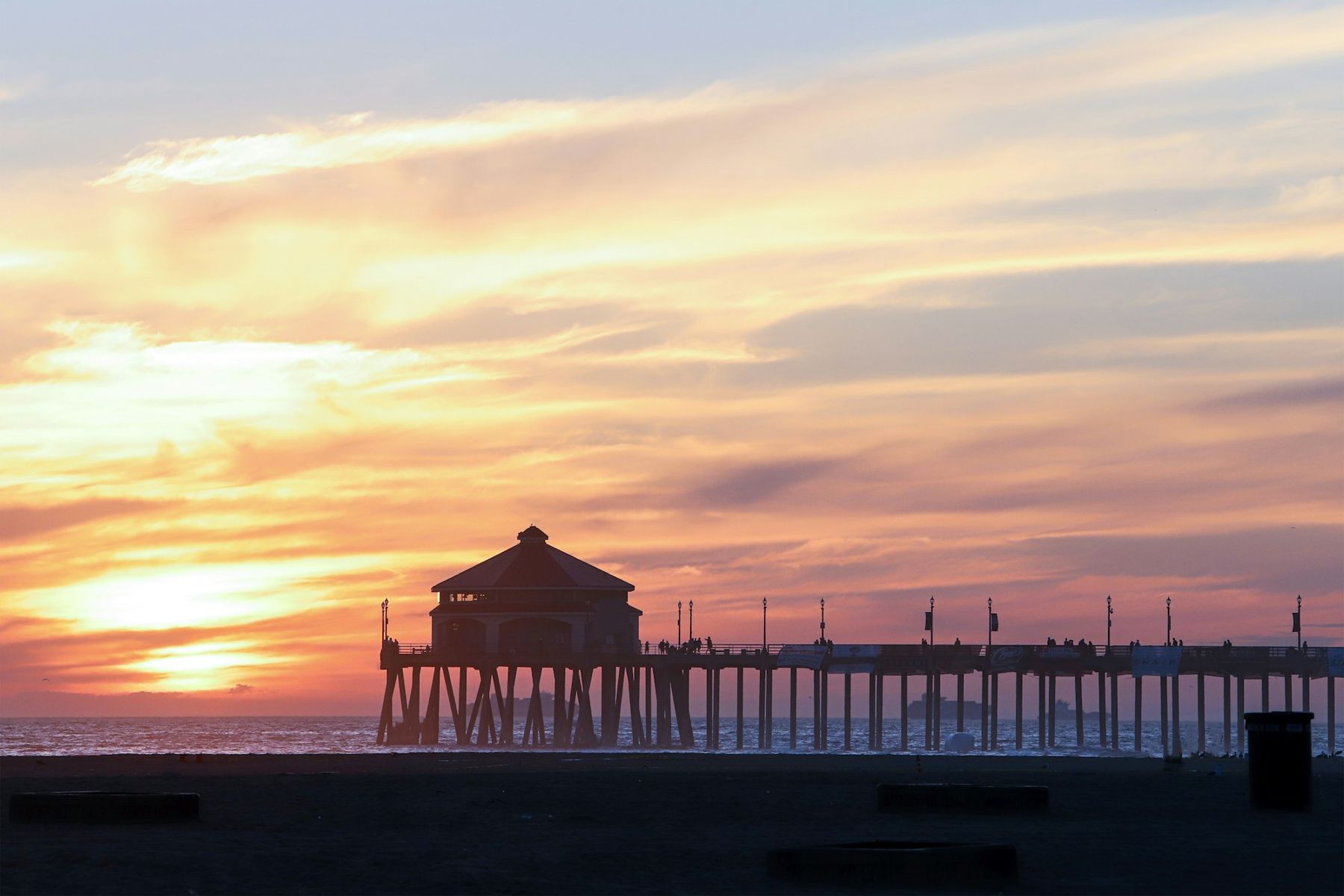
Huntington Beach stretches for miles along the northern half of the Orange County coast, and its centre is the pier at the foot of Main Street. The town has long called itself Surf City, and for once the nickname is fair: the waves on either side of the pier are ridden almost every day of the year, from first light until dusk. For a traveller at John Wayne Airport (SNA) with half a day to spare, it offers a wide, open beach, a long walk out over the water and, a short ride north, one of the best places on this coast to watch birds.
The pier
The Huntington Beach pier runs straight out from the end of Main Street, well beyond the surf line. Storms have damaged it more than once over its long history, and the present concrete structure dates from a rebuilding in the early 1990s that was meant to stand up to big winter swells. Walking to the end and back is a level stroll of half an hour or so, longer if you stop to watch.
From the rails you look straight down on the surfers. On a good day dozens of them sit in the line-up on each side, waiting for sets, and you can follow a wave from the moment it lifts to the moment it closes out near the sand. People fish from the far end, and pelicans and gulls work the water below. On clear days the view runs down the coast towards Newport and out to Catalina Island on the horizon.
The pier is open long hours, but it can close in heavy storms or for repairs. If the weather is rough, check before you go.
Surf culture, plainly
Surfing reached California from Hawaii in the early twentieth century, and Huntington became one of its mainland centres. The town hosts large professional and amateur contests, the biggest of them in summer, when the sand beside the pier fills with stands, crowds and traffic. A small surfing museum a few blocks inland has long covered the sport's local history; check whether it is open before you plan around it.
The waves here break over sand and are usually friendlier than the reef and point breaks elsewhere, which is one reason so many people learn nearby. That does not make the water easy. Rip currents form along the beach, especially near the pilings, and the surf can be powerful in winter and during summer south swells. Stay close to a staffed lifeguard tower if you go in, and obey the posted flags. A surf lesson is the sensible way to try it, but a lesson plus changing and travel will use most of a half-day layover.
Watching costs nothing and needs no planning. Early morning and late afternoon bring the most surfers, and the low sun behind the pier at the end of the day is the view most people remember.
The beach and the path
South of the pier, the city beach gives way to Huntington State Beach, which runs down towards the mouth of the Santa Ana River. North of the pier, the sand continues towards Bolsa Chica. A paved path for walkers and cyclists runs behind the beach for much of this distance, so you can cover several miles on foot or by bike without touching a road. At the southern end it meets the Santa Ana River Trail, a link that matters more to cyclists than to a short visit; the guide to buses, bikes and what to do with your bags covers the options in general.
Fire rings, volleyball courts and lifeguard towers line the sand. Parking near the beach is mostly in paid lots and at meters, and it fills on warm weekends. Rates and rules change, so read the signs.
Bolsa Chica wetlands
A few miles north of the pier, across the coast highway from the beach, lies the Bolsa Chica Ecological Reserve. It is a large coastal wetland of tidal channels, mudflats and ponds, restored after decades of oil field use. A footbridge and level trails cross parts of the reserve, with views over the water and back towards the hills.
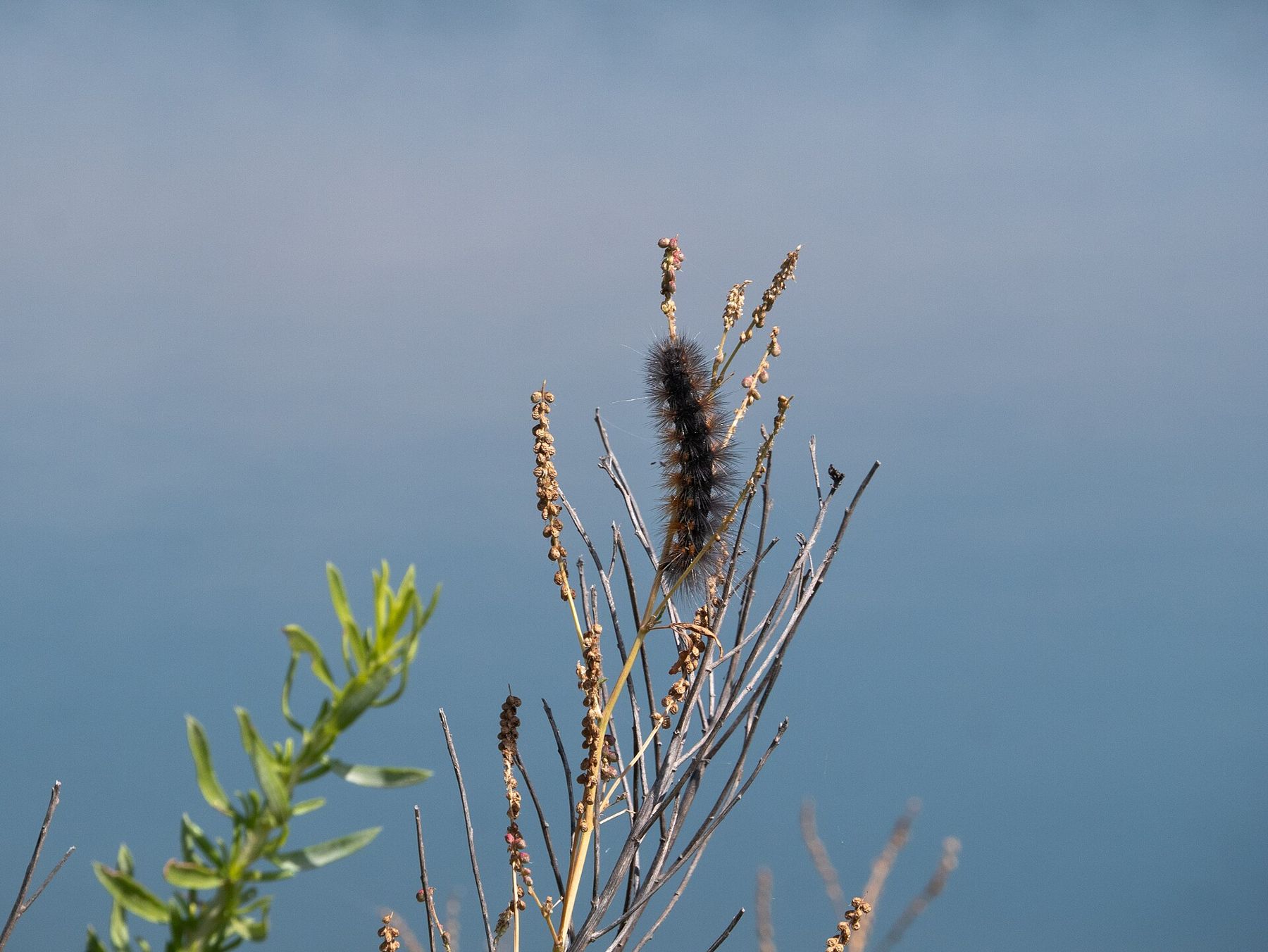
Birds are the main reason to come. Herons, egrets, pelicans and many kinds of shorebirds feed here, and in spring and summer terns nest on protected islands, filling the air with noise. Winter adds migrating ducks and waders. Some nesting areas are fenced off: stay on the trails and keep well back from any roped-off sand. Binoculars help a great deal.
A small interpretive centre stands near one end, with hours that vary, and the trails are generally open in daylight. Check before you go. Shade is almost absent, so carry water.
If birds are your main interest, compare it with Upper Newport Bay, which is closer to the terminal and similar in feel.
Getting there and getting back
Downtown Huntington Beach is roughly twenty to thirty minutes by car from the terminal in normal traffic, either on the 405 and then down to the coast, or on local roads and the coast highway through Newport Beach. A taxi or rideshare is the simplest option; ask for a drop-off near the foot of the pier. The guide to leaving the terminal explains airport pickups in general terms. Bolsa Chica is a further short ride north along the coast highway.
Public buses do link the airport area with the coast, but the trip involves changes and takes far longer than the drive. On a half day it is not a good trade.
The return is where plans go wrong. The coast highway through Huntington and Newport crawls when the beaches are busy, and the 405 near the airport is among the most congested roads in the region at rush hour. Leave Huntington at least three hours before your departure, more for an international flight or a checked bag, and follow your airline's own advice on arrival time.
A half-day plan
- A ride from the terminal to the foot of the pier.
- A walk to the end of the pier and back, watching the surf.
- A stroll along the sand or the beach path, north or south.
- If time allows, a short ride north to walk part of Bolsa Chica.
- A ride back with a generous margin.
If your time is tight, choose either the wetlands or a long beach walk; doing both in a hurry means doing neither well. Summer weekends and contest days bring the heaviest crowds and the slowest roads, while weekday mornings outside summer are the calmest. For a smaller, rockier stretch of coast further south, see the guide to Corona del Mar.