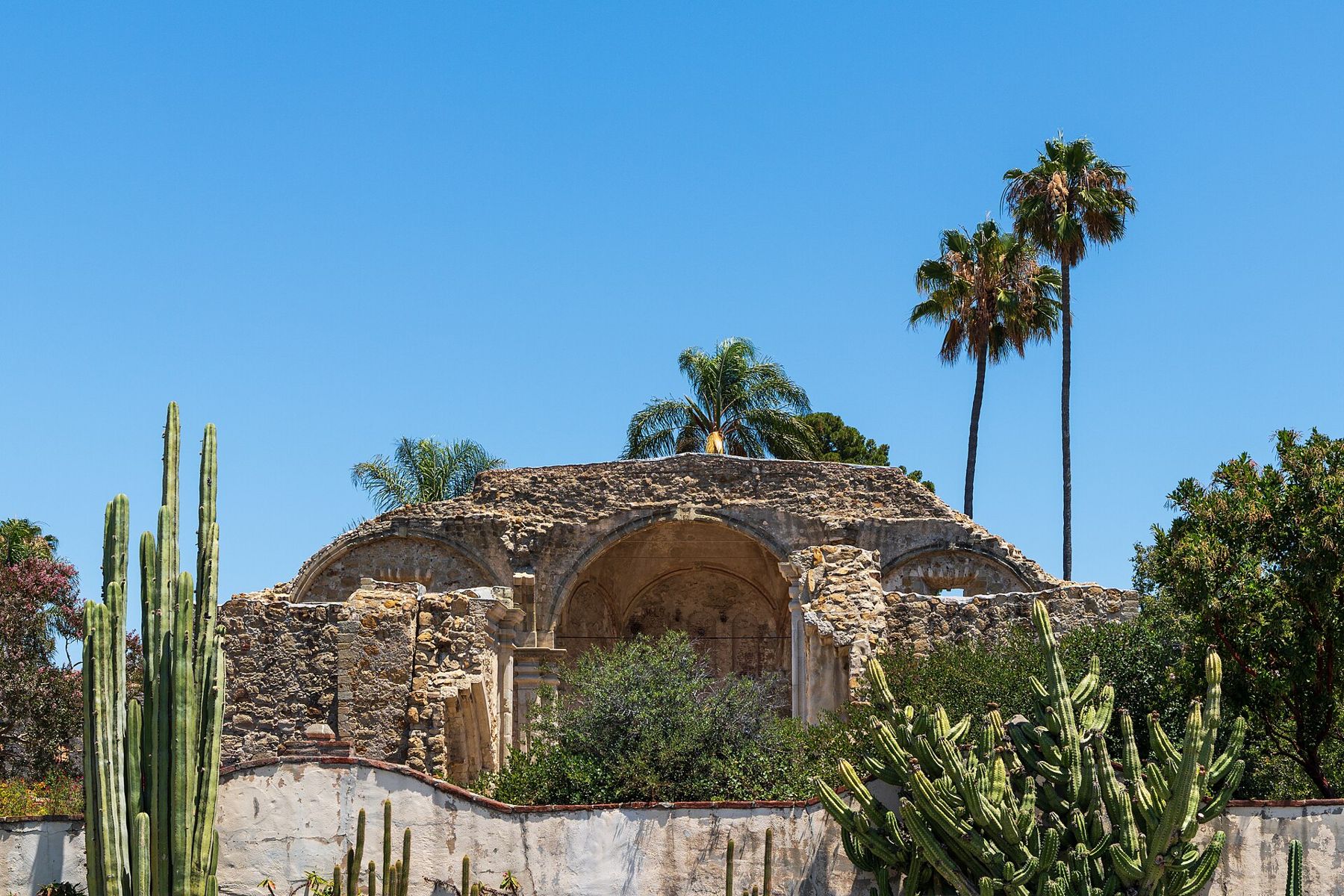
Mission San Juan Capistrano stands in the middle of a small town in the southern part of Orange County, roughly halfway between John Wayne Airport (SNA) and the San Diego county line. Behind its walls are long adobe arcades, courtyards of flowers and fountains, and the broken shell of a great stone church that fell in an earthquake two centuries ago. It is also a place where the history of California's Native peoples sits close to the surface. For a layover with half a day to spare, it is one of the most rewarding trips in the county, with the bonus that trains stop just across the tracks.
A short history, told plainly
The mission was founded in 1776 by Spanish Franciscan missionaries led by Junípero Serra, the seventh of the twenty-one missions that Spain set up along the California coast. It was built on the land of the Acjachemen people, who had lived in the valleys and along the shore of this region for thousands of years. The Spanish called them Juaneño, after the mission, and many of their descendants use both names today.
The mission system aimed to convert Native Californians to Christianity and make them subjects of the Spanish crown. In practice, Acjachemen people were drawn or pressed into the mission, baptised and put to work building it and farming its land, and once baptised they were not free to leave. Introduced diseases, harsh discipline and the loss of land, language and ways of life took a heavy toll, and the Native population fell sharply in the decades that followed. The adobe and stone you walk past were raised largely by Acjachemen labour.
After Mexico won independence, the missions were secularised in the 1830s and their lands passed into private hands. The buildings decayed for decades. In the 1860s the United States government returned the mission to the Catholic Church, and restoration began in earnest around the start of the twentieth century. Today it is both a museum and a working Catholic site. The Acjachemen remain an active community in the area, and the exhibits now say more about Native life, and about what the mission system cost, than they once did.
The Great Stone Church
The most striking sight inside the grounds is the ruin of the Great Stone Church. Work began in the late 1790s and took about nine years. It was a large building of cut stone with domes and a bell tower, far grander than the adobe chapels of most missions. In December 1812, only six years after it was finished, a strong earthquake brought much of it down during a morning Mass, and dozens of people inside were killed. The church was never rebuilt.
What remains is a roofless sanctuary, tall arches and walls of rough stone, now stabilised and protected. Standing inside, you can still read the shape of the building. The nave, the side chapels and the arches that once carried the domes are all there in outline, open to the sky.
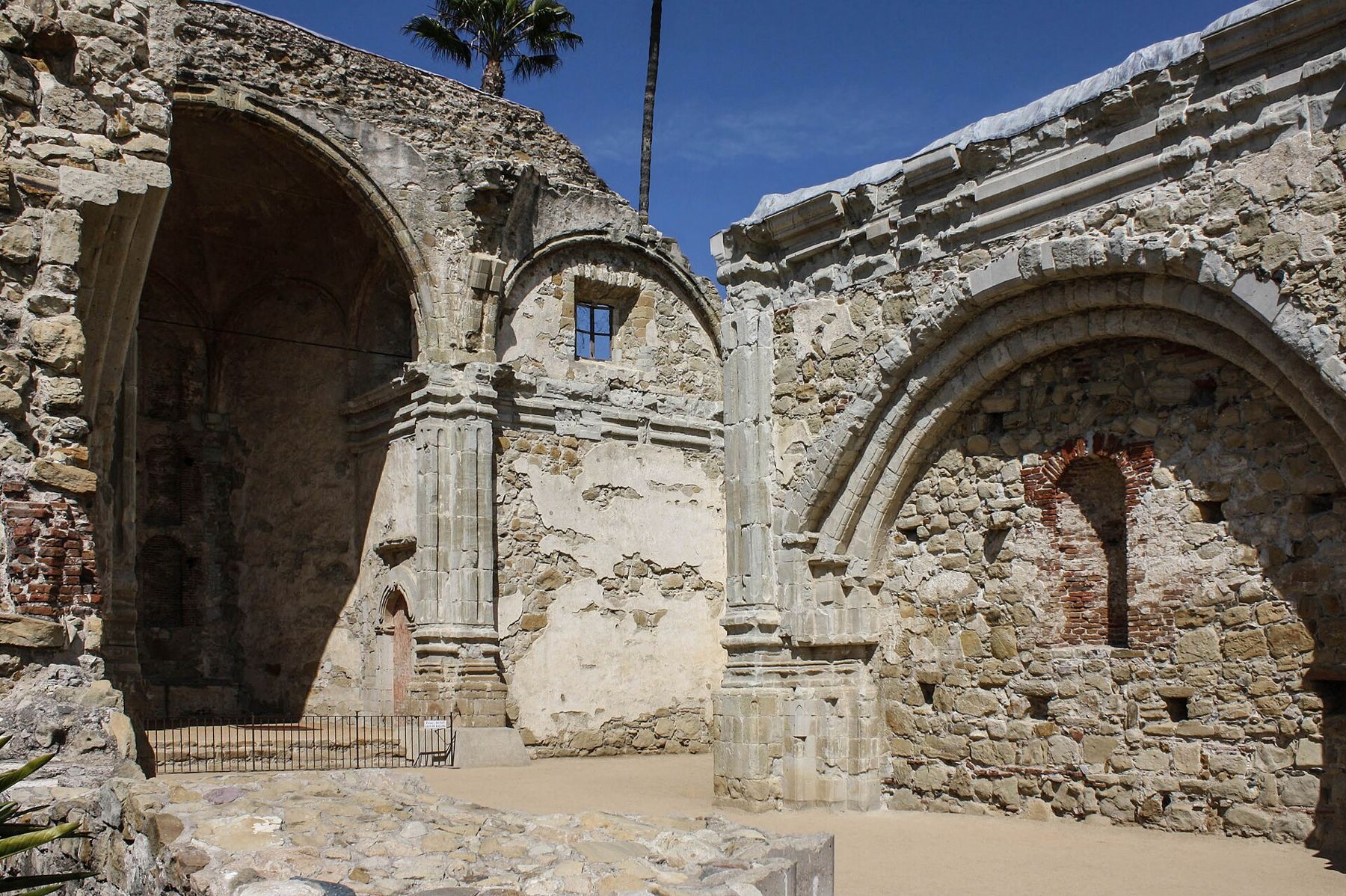
Standing inside, you can still read the shape of the building.
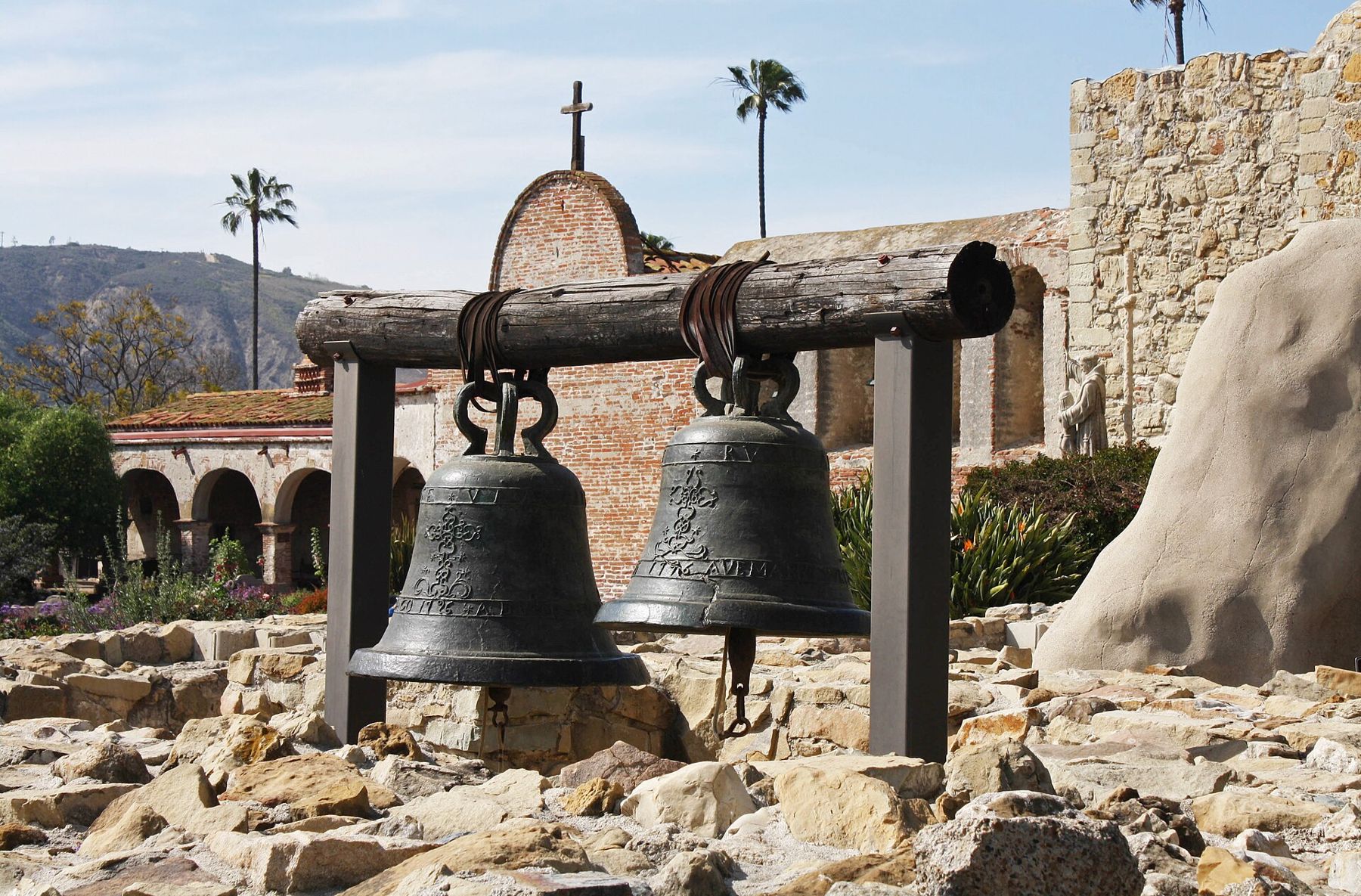
Nearby, old bells that once hung in the tower are displayed on a heavy wooden frame. Elsewhere on the grounds, the small Serra Chapel is often described as the oldest building in California still in use, and services are still held there. Rooms around the courtyards hold exhibits on mission life, crafts and the Acjachemen people, alongside the soldiers' barracks and the remains of workshops, kilns and the vats where hides and tallow were processed. Outside the walls, a much larger modern church, completed in the 1980s, echoes the design of the fallen one.
The swallows
The mission is famous for its cliff swallows. Each spring these small birds arrive from South America and build mud nests under eaves and arches, and a story grew that they return to the mission on or around St Joseph's Day, March 19. A popular song around 1940 spread the legend far beyond California, and the town still marks the swallows' return with a festival and a parade each spring.
The honest version is that far fewer swallows nest at the mission now than in the past. Building around the town changed the open land and insect life the birds depend on, and repairs to the old walls removed many nesting sites. The mission has tried various ways to draw them back. In spring you may see a few, but do not plan a layover around them.
Gardens, Los Rios and the station
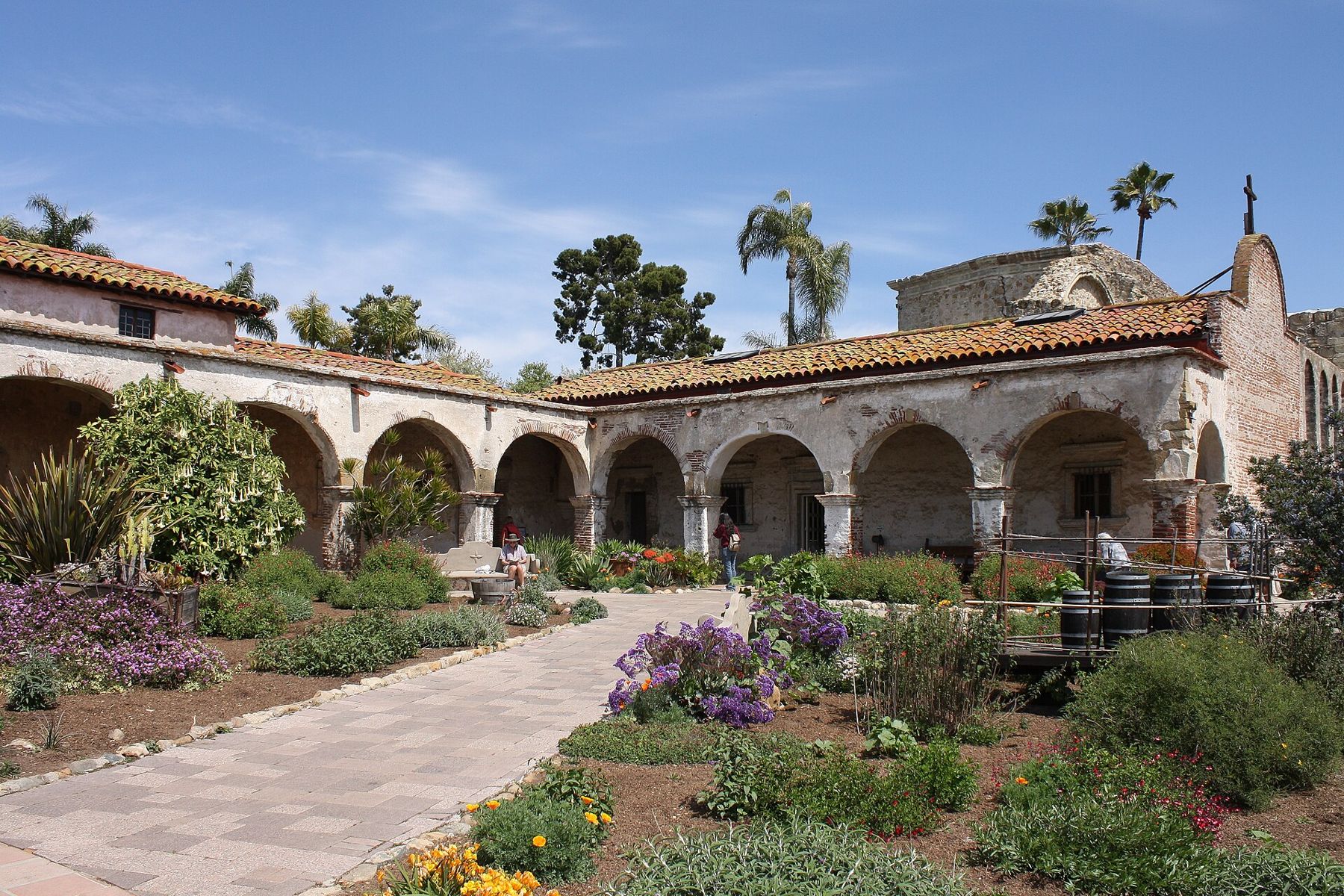
The courtyards are planted with roses, succulents, cacti, citrus and flowering shrubs, with a fountain at the centre of the main courtyard. Spring is the most colourful season, but something is in flower most of the year. Benches in the shade of the arcades make it an easy place to sit and let the time slow down, which is useful advice for a traveller who has just come off a plane.
Across the railway tracks from the mission lies the Los Rios Historic District, a short lane of small adobe and wooden houses, some among the oldest homes still standing in California. Several are private houses; others hold small businesses. A walk along it and back takes about fifteen minutes.
The mission charges admission, and its hours, events and closures change, so check before you go. It is busiest on weekends and during school field-trip season, and weekday afternoons tend to be quieter.
Getting there and getting back
By road, San Juan Capistrano is roughly twenty-five to thirty-five minutes from the terminal in normal traffic, most of it on the I-5. A taxi or rideshare can drop you at the mission entrance. The guide to leaving the terminal covers airport pickups in general terms.
The train is the other option, and a good one if the times suit. The San Juan Capistrano station sits right beside the mission and the Los Rios district, and both Metrolink and the Pacific Surfliner stop there. The airport has no station of its own, so you first need a short ride to a station such as Irvine, then a southbound train. Timetables vary, some trains run only at certain hours or on certain days, and service on the coastal line has been interrupted at times. Check before you go, and never rely on a single train back. The guide to buses, bikes and what to do with your bags explains the rail options in general.
A realistic half day looks like this:
- A ride or a train to San Juan Capistrano.
- An hour and a half to two hours inside the mission: the ruin, the chapel, the exhibits and the gardens.
- A short walk along the Los Rios lane.
- A ride or train back, leaving with a wide margin.
Northbound traffic on the I-5 builds through the afternoon and meets the 405 near the airport, which is heavy at rush hour. Leave San Juan Capistrano at least three and a half hours before your departure, more for an international flight, and follow your airline's guidance on arrival time. With a whole day, the coast is close: Dana Point and its harbour are a few miles away, and San Clemente lies a little further south on the same rail line.