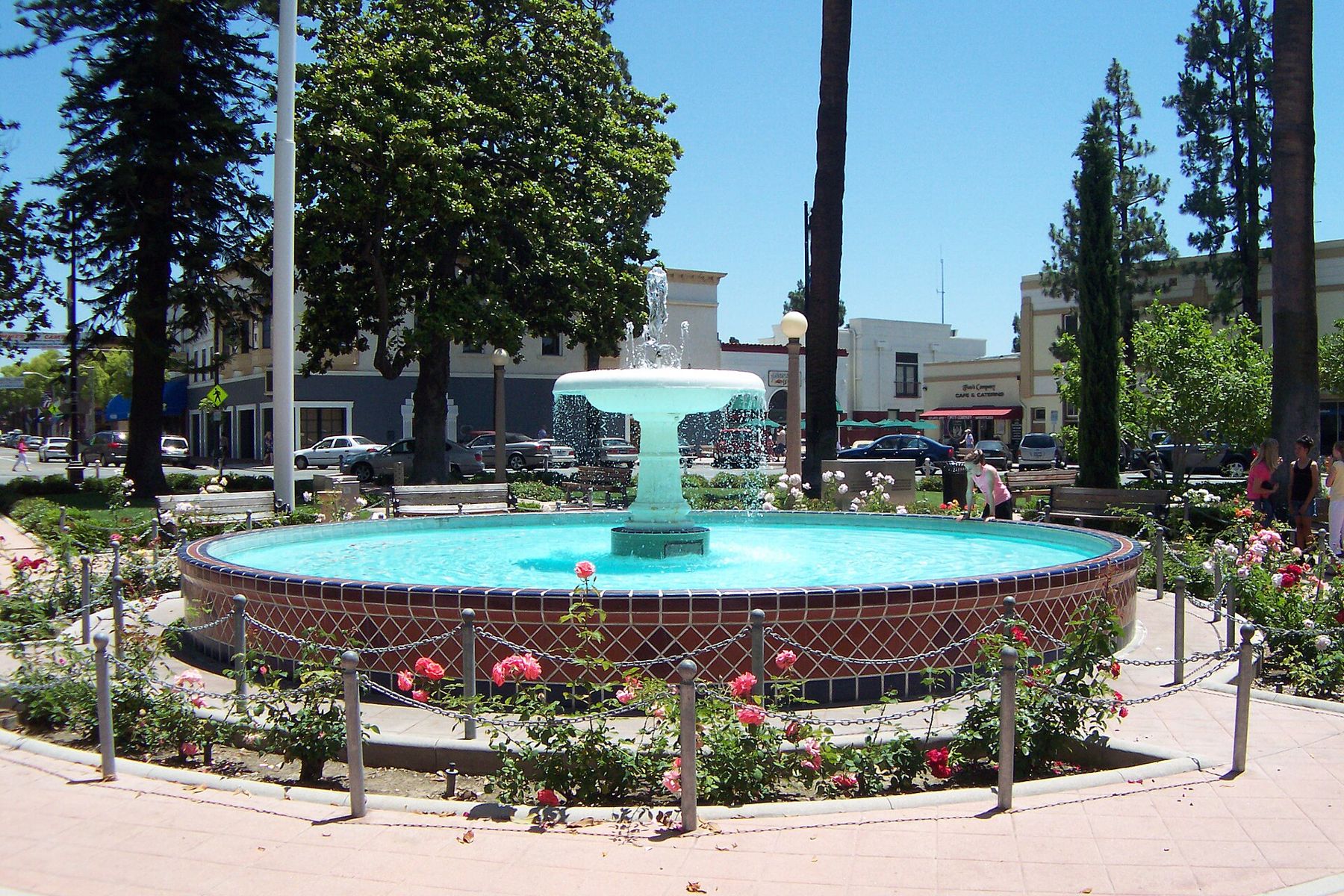
Most of Orange County was laid out for the car. The old centre of the city of Orange was laid out for walking, and it still works that way. At its heart is the Plaza, a round park with a fountain in the middle of a traffic circle, and around it spread blocks of brick commercial buildings and quiet residential streets of houses more than a century old. It lies inland, about twenty minutes north of John Wayne Airport (SNA) by car, and it offers something the beach towns do not: a small-town centre from the nineteenth century that has survived almost whole.
The Plaza
The town was laid out in the early 1870s, and the Plaza has been its centre ever since. Two main streets, Chapman Avenue and Glassell Street, meet at the circle, and locals often call the whole area simply the Circle. The park inside is small: a ring of lawn, roses, tall trees and benches, with a tiled fountain at the middle. Traffic moves slowly around the outside.
The buildings that face the Plaza and line the four streets leading off it date mostly from the late nineteenth and early twentieth centuries: brick and stone shopfronts, tall upper windows, a few decorative cornices. Many of them hold antique and vintage dealers, a trade the area has been known for over decades, along with places to eat. You can walk all four arms of the circle and back in half an hour.
A historic district on foot
The streets around the Plaza form the Old Towne Orange Historic District, roughly a square mile in size and one of the largest districts of its kind on the National Register of Historic Places in California. Local design rules protect the look of the buildings, which is why so little has been torn down or replaced.
The residential streets are the real surprise. Walk a few blocks in any direction from the Plaza and you reach shaded streets of Craftsman bungalows with deep porches and low gables, alongside Victorian cottages, Spanish Revival houses and a few grander homes. Many have been restored with obvious care. These are private homes, so enjoy them from the pavement.
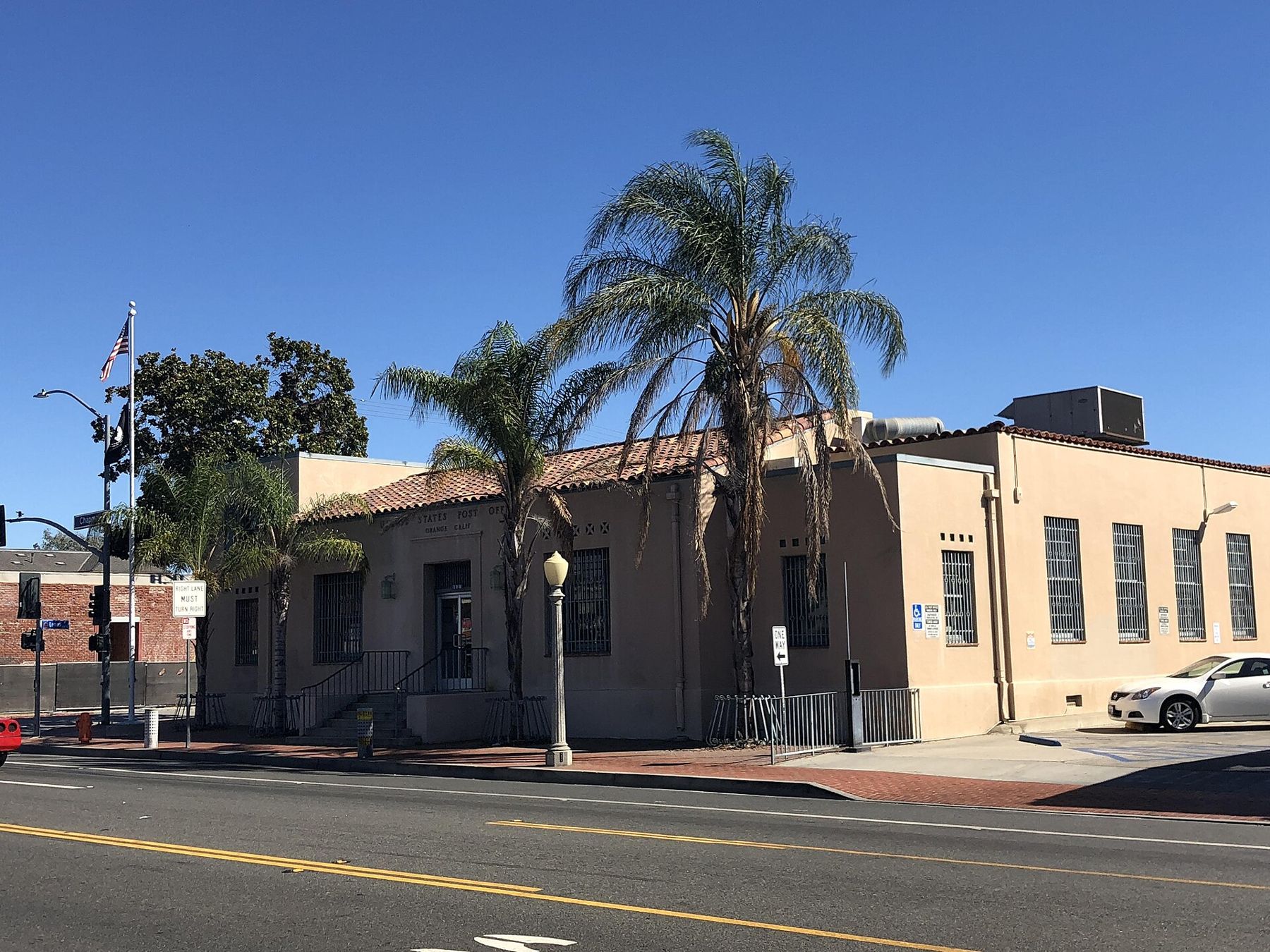
Public buildings add to the picture. The post office, a short walk from the Plaza, is a low building with a red tile roof and arched details in the Spanish Revival style that was common for civic buildings in Southern California in the early twentieth century. Churches, a library and older schools are scattered through the district too.
Chapman University
A few blocks north of the Plaza is the campus of Chapman University, a private university that moved to Orange in the 1950s and has since spread across a good part of the northern end of the old town. Its older buildings and lawns sit comfortably beside the historic houses, and visitors can usually walk through the grounds. The students and staff help keep the old centre busy on weekdays, at a time when many town centres in the region rely on weekend visitors alone.
Respect any areas marked for students or staff only, and remember that term dates, events and graduations can make the streets around campus much busier.
Getting there
Orange is about twenty minutes by car from the terminal in normal traffic, mostly on the 55. A taxi or rideshare can drop you at the Plaza itself. For airport pickups in general, see leaving the terminal.
Metrolink trains stop at the Orange station, a few blocks west of the Plaza. There is no station at the airport, so the train only makes sense if you first take a short ride to a station on the same line, such as Tustin or Santa Ana, and if the timetable suits. Service is heavier on weekdays than at weekends, and times change, so check before you go. OCTA buses also run along the main streets through Orange, but the trip from the airport takes far longer than the drive. The guide to buses, bikes and what to do with your bags covers these options in general.
When to go
Inland weather differs from the coast. Summer afternoons in Orange are often much hotter than at the beach, and the morning grey that hangs over the coast in late spring may not reach this far. Spring and autumn are the most comfortable times to walk; in high summer, go early and keep to the shaded streets. The guide to June gloom, Santa Anas and the best hour of light explains the difference between coast and inland.
Weekends bring more visitors to the Plaza, and a large street fair is held around it at the end of summer, with road closures and crowds. Check the city's event calendar if your layover falls then.
A few hours in Orange
- A ride to the Plaza and a slow lap of the circle and the four streets off it.
- Half an hour or more on the residential streets east and south of the Plaza, among the Craftsman houses.
- A walk north to the university grounds, if time allows.
- A ride back with a wide margin.
If you have longer and a car, the Santa Ana Mountains begin a short drive east, with Irvine Regional Park at their foot. Either way, watch the clock: the 55 and the 5 near Orange are among the slower roads in the county at rush hour. Leave at least three hours before your departure, more for an international flight, and follow your airline's advice on when to be back.